Cartagena


Currency
COP
Language
Spanish
Timezone
Bogota
Continent
South America
Discover Cartagena
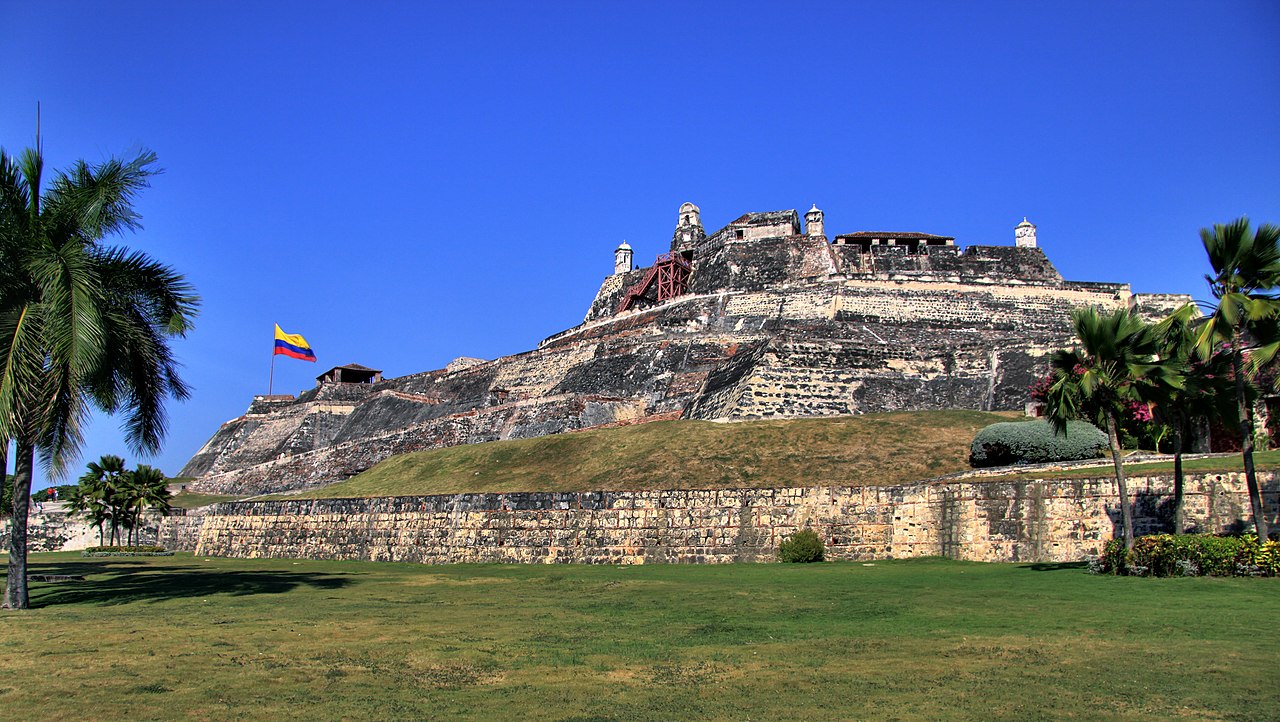
Cartagena was the port Spanish gold passed through, and it fortified accordingly: eleven kilometres of walls still enclose the old town, with its wooden-balconied houses and bougainvillea. The Castillo San Felipe de Barajas, built on a hill facing the city, is the largest Spanish fortress in the Americas and was never taken. The Puerta del Reloj, the old main gate, opens onto the Plaza de los Coches. The Catedral de Santa Catalina de Alejandría and the Iglesia de San Pedro Claver — named for the Jesuit who defended the enslaved people landed here — close the historic centre.
When to go
December to April, the dry season: hot, sunny, with a trade wind that makes the heat bearable. It is high season, so the most expensive and the busiest. From August to November the downpours are heavy but short and prices drop sharply. It is hot all year, around thirty degrees, and the humidity never really falls.
Getting around
The old town is walked entirely and that is the only way to see it — the streets are narrow and the distances short. Getsemaní, the neighbouring district, is ten minutes on foot. The Castillo San Felipe needs a short taxi ride or twenty minutes' walk. Taxis have no meter: agree the price before getting in. The Bocagrande beaches are walkable from the walls.
Where to eat
Arepas de huevo, corn fritters with an egg inside, are breakfast on the street. Colombian ceviche is milder than Peru's, often made with coconut milk. Tropical fruit is sold on corners, cut to order by the palenqueras in their bright dresses. Fried fish with coconut rice and patacones is the Caribbean coast's plate. No halal address is listed.
Good to know
The Colombian peso is the currency and cash is still needed outside tourist restaurants. The heat calls for water and shade in the middle of the day: Cartageneros themselves slow down between noon and three. Haggling is expected from street vendors, not in established shops. And the selling is constant in the old town — a polite, firm no is enough.
Where to Stay in Cartagena
Top Activities in Cartagena
 landmark
Castillo San Felipe de Barajas
 landmark
Catedral de Santa Catalina de Alejandría
 landmark
Puerta del Reloj
 landmark
Iglesia de San Pedro Claver
 landmark
Baluarte de Santo Domingo
 landmark
San Sebastián del Pastelillo Fort
 landmark